
New iPods and Apple TV Might As Well Be Hotcakes

Because that is what they are going to sell like. A few hours ago, Apple held its usual fall iPod refresh event to set things up for the holiday season. And as an added bonus, Apple live streamed the event on their site, a first since 2002.

Steve Jobs handled the keynote solo style today, save for one developer demo. As many of you know, Jobs has had some major medical issues over the past couple years, culminating in a leave of absence and a life-saving liver transplant. When he returned to Apple, the fall iPod event was his first round of stage time. That was one year ago, and he appeared exhausted and frail. Today was completely different. He looked healthy, was energetic, and even cracked a number of jokes. Glad to see you’re well, Mr. Jobs.

Steve kicked off the event by recognizing Steve Wozniak, co-founder of Apple, who was in the audience. Then he talked about the success of Apple’s retail operations. Next, the overall health of the App Store. And then, with all the numbers out of the way, the really good stuff.

iOS 4.1

Steve introduced iOS 4.1, available for download next week, and ran through some of the updates. He explained there are a lot of bug fixes, primarily with the proximity sensor of iPhone 4, issues with Bluetooth, and performance with iPhone 3G (and presumably second-generation iPod touch, as the hardware is similar). 

There are several new features landing as well. The camera is getting an HDR (High Dynamic Range) photo setting. Basically, turn it on, and the iPhone will take three photos in rapid succession at different exposures, then meld them all together to present a perfectly exposed photo, in theory. As I am a bit of a camera nerd, I have a feeling I will love this simple implementation. Honestly, these days I take more pictures with my iPhone 4 than my Canon 40D.

iOS 4.1 will also allow HD Video uploading to YouTube and MobileMe when connected to WiFi, TV show rentals, and the introduction of Game Center.

Game Center is all about multiplayer games. You can challenge friends or be auto matched with a stranger. You can also compare scores on a leader board and discover new games. Game Center will be an app on your device, but also an API for developers to integrate Game Center into their games.

iOS 4.2

Yes, you read that right, Steve also talked about iOS 4.2. The primary mission of iOS 4.2 is to bring everything in iOS 4.1 to the iPad (finally). A couple other features will be wireless printing and AirPlay. I’ll talk about AirPlay in a bit. iOS 4.2 will be a free update to iPhones, iPod touches, and iPads in November.

iPod

Steve said the secret to the success of the iPod is that Apple has never rested on its laurels. Seems true enough to me. And these new models are very impressive.

iPod shuffle

Starting with the iPod shuffle, Steve took a walk down memory lane and discussed the first, second, and third generation of the shuffle. People loved the first one, went nuts for the second (which I have long said was the perfection of the shuffle design), and that the third wasn’t much of a hit. See, Apple had removed all of the controls from the third generation, moving them all to the headphones. What a disaster. Well, the fourth generation brings back the controls, and looks like a slightly smaller version of the second generation. The shuffle comes in silver, blue, green, orange, or pink. It has a 15 hour battery and will be available next week at $49 for 2GB.

iPod nano

Apple has heralded the death of the click wheel, the iconic input method of mobile music player history. The new iPod nano has a 1.5” touch screen, a clip on the back like the shuffle (runners won’t need a silly armband for it), dedicated volume buttons, and does still have enough room for the 30-pin Dock connector.

The new nano is, however, missing a few features that the last generation had. Those would be the video camera, the ability to play video, and games. In fact, the interface looks a lot like iOS, even down to putting icons in jiggly mode and rearranging them. But, I’m not sure if it is iOS or just looks like iOS. (My wager is that it is iOS, but locked down). 

The new nano is quite the compelling redesign. It will also be available next week in silver, black, blue, green, orange, pink, and red. It has a 24-hour battery and comes in 8GB and 16GB, selling for $149 and $179, respectively.

iPod touch

Apple added a lot to the iPod touch and somehow made it even thinner. The new iPod touch gains the A4 processor found in the iPad and iPhone 4, the amazing Retina Display (by far my favorite feature of the iPhone 4), a 3-axis gyroscope, and not one, but two cameras! The is a camera on the back that can record HD video, but sadly takes fairly low resolution photos, and then a camera on the front for — wait for it — FaceTime video conferencing! I have a feeling this may be popular with some of my relatives. I know FaceTime was indispensable for my son and I when my wife went out of town for a week last month.

The new iPod touch will be available next week, running iOS 4.1 with Game Center. It will be available in capacities of 8GB, 32GB, and 64GB at $229, $299, and $399, respectively.

Sidenote: Unlike previous years, all three capacities are the new generation of iPod touch. Traditionally, Apple has relegated the previous generation to the 8GB slot. This time, all three carry cameras, Retina displays, and A4 chips. Color me impressed.

iPod classic

Not even a mention in the keynote. Not pictured in the iPod family lineup. I thought it may finally be dead. But no, there it sits, unchanged from last year, on Apple’s site. A relic now in more way than one, what with the spinning hard drive and the click wheel. I will be truly surprised if the classic still exists as a product after next year’s fall event.

iTunes

Apple unleashed the tenth major iteration of iTunes, iTunes 10. Steve explained that since the iTunes Store is about to surpass CD sales, they decided to ditch the CD out of the icon. I very much like the look of the new icon. I’ve thought for a while that the CD sure seemed dated this day and age.

Other enhancements, according to Apple, are a new hybrid view, where you’ll get album artwork for 5 or more songs that are from the same album in list view. 

Apple also set out to strengthen music discovery by creating a new social network inside iTunes called Ping. Follow artists and friends and be followed, create a circle of friends, post your thoughts and opinions, see customized song & album charts, and see concert listings. 

I’m not too sure about Ping, but I have yet to try it out, as iTunes 10 went from “Available Today” to “Coming Soon.”

One last note that I noticed from the screen shots is that the close, minimize, and zoom buttons (at least on the Mac) have gone from being horizontal to vertical and in line next to the player controls, saving ¼” of space of vertical window real estate. It’s a small thing, and seems odd compared to the rest of Mac OS X, but let’s face it, screens are getting wider, not taller. I like it, and I hope the rest of Mac OS X goes this way in the next major update.

One More Thing Hobby

Since the introduction of the Apple TV in 2007, Apple has referred to it as a hobby. The hardware had remained unchanged except for a hard drive bump from 40GB to 160GB. But it’s the one Apple product I can think of that hasn’t had much success. Why? Well, according to Apple, customers want Hollywood movies & TV shows, everything in HD, lower prices for content, no reliance upon a computer, no worrying about managing storage, no syncing, and they want it to be silent, cool, and small.

The new Apple TV is ¼ the size of the old, fits in your hand, the content is in HD, and is on a rental model. HD movie rentals are available day and date with DVD releases for $4.99, and TV shows are available to rent for 99¢. The content is streamed straight to the device, and there is even support for Netflix Instant.

AirPlay

Now let’s talk about AirPlay. There’s been a technology in the AirPort Express called AirTunes for a while now, which let you stream music from iTunes to speakers connected to an Airport Express. AirPlay replaces that, and expands upon it. One feature of AirPlay is the ability for any iOS device to stream content to an Apple TV. And not just music, but videos and photos too. Let’s say you’re watching a movie on your iPad, but you decide to move to the living room. A couple taps, and the iPad pushes the movie onto your TV via the Apple TV. Same goes for an iPhone or iPod touch. This feature will come with iOS 4.2.

Another expansion of AirPlay is it won’t be limited to AirPort Express and Apple TV. Third parties will be able to embed AirPlay compatibility into their devices. According to Engadget:

That means you’ll be able to stream music from iTunes, your iPhone, iPod touch or iPad to speaker docks, receivers and stereos from companies like Denon, Marantz, Bowers & Wilkins, JBL and iHome, complete with song, album, and artist info and album art.

Sounds like a winner to me.

Wrap Up

Overall, I think it was a great event. I hope the trend will be to live stream keynotes in the future. I know my mother is already green with envy for the new green iPod nano, though I’d rather her have an iPod touch for FaceTime (are you reading this, Mom?) I’d be surprised if these new iPods aren’t on a few of my relatives’ Christmas lists. 
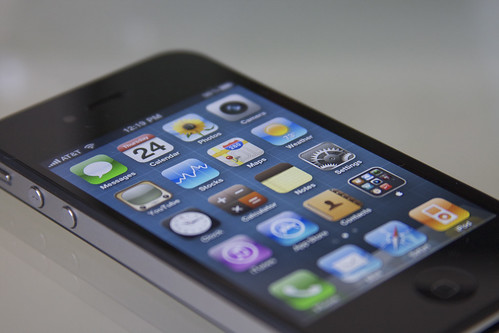
iPhone 4 Changes Everything. Again.

iPhone 4

Apple’s confident slogan for iPhone 4 has been mocked by many who say there isn’t anything special about it compared to the competition (i.e. Android). There is no doubt that in 2007 Apple changed everything for the mobile phone market with the introduction of the original iPhone. But that was a change in what defined a mobile phone. Now every new phone seems to sport a touch screen and apps. How could the iPhone 4 change the game again in such a short time? Allow me to explain through a rundown of the hardware and software.

Hardware

The iPhone 4’s hardware is a masterpiece. The front and back are made of glass, and the stainless steel band around the edge acts as the iPhone’s antenna system for WiFi, Bluetooth, GPS, and 3G. The volume buttons and the ring/silent switch are also metal. The entire phone feels like a handcrafted Aston Martin. Good riddance to the plastic back of the iPhone 3G/3GS.

More Than Meets the Eye

Apple upgraded the display in the iPhone for the first time — and it is a jaw-dropping improvement. The display has four times as many pixels as previous iPhones, and they are calling it the Retina Display. Why? Because at 326 pixels per inch, it is near impossible to distinguish the individual pixels with the naked eye, unless you happen to have superb vision (and even then, I’d be surprised). 

The screen is so sharp that it literally looks as if text and images is printed directly on the glass. View the screen from an oblique angle and the color doesn’t distort in the slightest. It looks like a finely printed glossy page from National Geographic. This makes me wish my iPad had a Retina Display. 

More Horsepower Than an Audi A4

Apple’s A4 chip, which made its debut in the iPad a few months back, has made its way to the iPhone as well. The A4 is a screamer. Everything about the new iphone is fast. The camera snaps shots instantly and successively, games are fast and smooth, web pages load much faster, pinch-zooming on a site re-renders the text instantly, etc. 

I didn’t used to enjoy my games on the iPhone 3G since they often stuttered and crashed. Now, to be fair, those particular games were made after the iPhone 3GS came out and were likely optimized for that hardware. But now those games load and play so much faster and smoother, I can see myself spending more time with them. RampChamp, prepare to knock over some clowns.

Shutterbug

The rear camera on iPhone 4 was also improved, as it now has 5-megapixels, a backside illuminated sensor, and an LED flash. The pictures it takes are phenomenal for a smartphone camera. I imagine that has a fair amount to do with Apple’s superb camera software, as well.

The rear camera can also shoot in 720p HD video. And it looks just as nice as my Kodak Zx1, which I think will need a new owner. 

iPhone 4 has another camera on the front, for self portraits and FaceTime video calls, which I’ll discuss shortly.

Software

Last Monday, Apple released iOS 4 for most previous iOS devices. The iPhone 3GS and 3rd Generation iPod touch received the full gamut of features, whereas the iPhone 3G and 2nd Generation iPod touch received most features, and the original iPhone and iPod touch were put out to pasture. Naturally, iPhone 4 is what iOS 4 was made for, and it even gets a few bonus features.

Multitasking

Many folks in the media have railed Apple for bringing limited multitasking, rather than allowing any and all apps to run simultaneously in the background. I actually think Apple is thinking correctly in using fast-app switching, and allowing several special processes to run in the background, such as task finishing, Voice-Over-IP (think Skype), GPS, and background audio, along with a couple other things.

So far, I love the feature. It’s nice to not have to do the “home screen shuffle” to switch between a few apps. For instance, I have been switching a lot between 1Password and Safari for passwords to various accounts. Now, speaking of the home screen shuffle…

Folders

The home screen now allows you to drag one app onto another app and create a folder. Each folder can hold 12 apps, but it only show 9 mini icons within the folder icon. I took 5 screens of apps down to two. It’s nice having all of my games in a Games folder, and I moved all my social media apps into a Social folder. You get the picture.

There’s No Time Like FaceTime

Let’s talk about that little front facing camera again. The real reason Apple added that is for their new FaceTime feature. Let’s say I am out of town, and I am talking on the phone with my wife on her iPhone 4. I want to see her and my son, so I tap the FaceTime button in the call window, and suddenly, after she accepts, I am seeing my family. This technology works flawlessly. Granted, right now it only works on WiFi, and only iPhone 4 to iPhone 4, but Steve Jobs said a couple weeks ago they will have tens of millions of FaceTime devices in the channel by the end of the year. Gee, I wonder what the next iPod touch will have?

The nice thing about FaceTime is you don’t have to be in a phone call to use it. Around noon today, I opened up my friend Nik’s contact card, and tapped the FaceTime button there, because I know he received one today. Now, Nik lives in England, but upon tapping FaceTime, it buzzed his iPhone 4, and we were seeing each other face to face. I flipped the view to the rear camera and showed him Nebraska, and he did the same and showed me Brighton. 

Apple may call the iPad magical, which it is indeed quite so, but FaceTime is the real magic. Yes, we’ve had this technology for years with webcams and iChat and Skype…but this on your phone, which you can walk around with, and show people things around you and share moments with them. 

For instance, when I flipped to the rear camera and pointed it at my growing son, Nik’s mouth gaped and his hand went to his forehead in disbelief at how big my son become (he’ll be two soon). Never before using iChat have I shared a moment like that. FaceTime is going to bring about a more personal form of communication.

Why This Changes Everything Again

Apple is making a move that few companies can pull off — they are going right for our hearts. Seriously, watch their video about FaceTime and I would be surprised if you weren’t moved by it. I can’t properly describe the enchantment of using FaceTime. It is not like the video conferencing we’ve known. It isn’t anything like sitting in front of a computer. FaceTime is all about sharing moments with others. For me, it is seeing two friends I haven’t spoken with in some time, one across the country, another across an ocean (or The Pond, as he would say). 

And this technology is just in its infancy. I can’t even imagine where we’ll be when my son leaves home in 16 years. All I know is I’ll still be able to see him, and that strikes me to my core.

Apple isn’t just a consumer electronics maker. If you’ve ever spoken with someone who works there, you can tell that they believe they are changing the world for the better. And I’m not just talking about listening to Apple’s top brass spinning PR, I’m talking about the folks who actually come up with these new ideas. FaceTime is absolutely simple to initiate. You don’t have to register for an account, or worry about which program to use. If the basic qualifications are met, it just works. 

So yes, overall, iPhone 4 is an evolutionary step in the new world order of mobile phones that its progenitor started. Being able to see who you are talking to, easily, while showing them important things around you, with half a world between you…that is what is truly magical.

WWDC 2010: iPhone 4

Wow. That could pretty much sum up Steve Jobs’ WWDC keynote address for me. This was probably the best keynote from Apple, in my opinion, since the January 2007 unveiling of the original iPhone at Macworld. Steve wasn’t kidding when he said at one point, “For 2010, we’re going to take the biggest leap since the original iPhone.”

Before I delve into iPhone 4, though, it is worth mentioning that Apple gave a recap of iPad’s success, and showed off a forthcoming update to iBooks. 2 million iPads have been sold in three months. When that is averaged out, that is 1 iPad every 3 seconds. To me, that is absolutely crazy. I blows my mind. iBooks is getting an update in a couple weeks that will enable highlighting, notes, and bookmarks, as well as native PDF reading support.

Next, Apple talked about a few highlights of the App Store, detailing some upcoming additions such as Netflix for iPhone (yay!) and Farmville (barf…).

Okay, now that the small stuff is out of the way, let’s get to what you really came here to read about.

iPhone 4

Look at that beauty. And I’ll tell you what, there is a lot going on with this phone to make it that gorgeous. Let’s break it down bit by bit.

All New Design

iPhone 4 is a mere 9.3 mm thick, making it 24% thinner than the iPhone 3G/3GS. This is thanks to the main structure of the phone being harnessed in a stainless steel band, sandwiched between an aluminosilicate glass front and back casing. You’ll notice a couple seams in the stainless steel band. Well, this sectioned band acts as the phone’s antennas, one supporting 802,11n WiFi, Bluetooth, and GPS, and the other supporting the 3G/EDGE GSM radio. Apparently, engineers were touting after the keynote to attendees that they found a way to transform the electromagnetic radiation given off by the radios into electric current, giving iPhone 4 the ability to boost its own reception. There is also a second microphone at the top of iPhone 4, right by the headphone jack, to provide noise suppression during phone calls. Amazing stuff. 

The back is no longer plastic. It is glass, just like the front. With my iPhone 3G, I have never worried about the glass front. It’s super durable. But, prior to my iPhone being switched out under AppleCare, the plastic back had suffered many small scratches and even developed hairline cracks around the headphone jack and dock connector, and even lost a small chunk of the plastic around the dock connector. The glass used in the iPhone 4 is different from the glass used in previous models. It is aluminosilicate glass, which makes it comparable in strength to sapphire crystal, 30 times harder than plastic. And since the glass used in previous models was virtually impossible to scratch, this new glass should make the back even more durable.

There’s a neat thing about the glass on the front of the device as well. Previous models of the iPhone suffered from a knack of getting dust between the glass and the display (my iPhone 3G went through this quagmire twice). Apple is using a new process of laminating the display to the glass, which should take care of this problem. John Gruber elaborates:

Apple had a demo area for the media after the keynote, so I got to spend some time hands-on with the iPhone 4. The resolution of the “retina display” is as impressive as Apple boasts. Text renders like high quality print. One thing that Apple didn’t mention in the keynote, though, is that the LCD pixels are much closer to the surface of the touchscreen. On existing iPhones (and iPods, and iPads), there is not a lot of distance between the glass surface and the LCD, but there is some. There’s also a very narrow amount of air between the touchscreen glass and the underlying LCD. If you’ve ever got a bit dust under your display, that dust is in the air between the glass and LCD.

It’s mentioned briefly in Apple’s promotional video about the design of the iPhone 4, but they’re using a new production process that effectively fuses the LCD and touchscreen — there is no longer any air between the two. One result of this is that the iPhone 4 should be impervious to this dust-under-the-glass issue. More importantly, though, is that it looks better. The effect is that the pixels appear to be painted on the surface of the phone; instead of looking at pixelsunder glass, it’s like looking at pixels on glass. Combined with the incredibly high pixel density, the overall effect is like “live print”.

It also improved the field of view for the display — you can view the display from an oblique angle and it looks great. Again, like print. It’s like a glossy magazine come to life.

To me, iPhone 4 looks to be solving the design problems of previous models. Check out Apple’s great video of the design.

Retina Display

Apple is moving from a 480x320 pixel display to a 960x640 pixel display. This will provide 4 pixels in the same physical space that one pixel occupied on previous models. Whereas previous iPhone models had an already impressive 163 pixels per inch, iPhone 4 has 326 pixels per inch, which provides the same quality as a page printed on a laser printer. Around 300 ppi, the human eye can no longer distinguish the individual pixels, some this display renders like print to our eyes, hence the “Retina” moniker. The display also has an 800:1 contrast ratio, which is 4 times better than before, and like the iMac and iPad, is employing In-Plane Switching (IPS) technology for greater color accuracy and an extremely wide viewing angle.

A4

I remember back in January of this year when Apple announced they were using a custom designed system on a chip, I sat back and hoped it would find its way to the next iPhone. Well, it did. iPhone 4 is powered by the same chip that runs the iPad, the Apple A4. Since the A4 uses very little energy, it is boosting the iPhone’s battery life up to 7 hours of 3G talk, 6 hours of 3G browsing, 10 hours of WiFi browsing, 10 hours of video, 40 hours of music, and 300 hours of standby. That, my friends, is great for a smartphone, and amazing for one of the iPhone’s caliber.

Gyroscope

Apple pioneered, to my knowledge, the use of an accelerometer in a mobile phone. This allowed the original and subsequent iPhones to sense when you held the phone sideways, and would adjust the orientation of photos, as one example, appropriately. The accelerometer also found its way into gaming apps, being used for apps such as driving games. Now, Apple is adding a gyroscope in addition to the accelerometer, giving iPhone 4 6-axis motion sensing, pitch, roll, & yaw, and rotation about gravity. I can’t wait to see what developers do with this handy piece of hardware.

Camera, Now with Lights & Action!

The iPhone has always had a fairly small camera sensor compared to competing devices, but has always produced fairly decent shots due to its superior software. Believe me, I have a shot of my son, taken with my iPhone 3G, that looks as if I took it with my Canon EOS 40D (I admit that it was taken under a perfect storm of natural light). Apple had upgraded the camera system in the iPhone 3GS with a 3 megapixel camera, tap to focus, and even included support for standard definition video.

iPhone 4 introduces a larger lens, and bumps the camera sensor to 5 megapixels. Most competitors are including 8 or even 12 megapixel cameras in their phones. Megapixels are not the end all be all of digital photography. In fact, what really matters with any digital camera, is light sensitivity. To accomplish that, the light-capturing pixels need to be able to soak up as much light as possible. Other phones are shipping cameras with sensors the same physical size as iPhone 4’s. However, by including 8- or 12-megapixels, those light-capturing pixels are smaller, meaning they soak up less light. 

iPhone 4’s light-capturing pixels are the same physical size as those in the 3GS’s camera, but the overall sensor is larger and the lens is larger than the 3GS’s. Also, Apple is using a backside illuminated sensor in iPhone 4 to bring even more light into the camera. Overall, iPhone 4’s camera should be fairly light-sensitive even in low-light situations. But, in those low-light situations, you can employ the use of iPhone 4’s LED flash.

The camera’s software continues to have Apple’s innovative tap to focus system, and introduces a 5x digital zoom.

The camera now also records 720p HD video at 30 fps. It also introduces tap to focus video. Apple also announced that they will be shipping iMovie for iPhone for $5 on the App Store. You can record HD video, edit it with themes, music, & transitions, and export it all from your iPhone.

iOS 4

Apple announced a name change to iPhone OS 4 because it runs on iPhones, iPod touches, and iPads. It is honestly a welcome name change. This section of the keynote was basically a recap of the developer preview back in March, which you can read my coverage of. One new thing worth mentioning is the addition of Bing as a search engine to Google and Yahoo!. Google will remain the default.

iOS 4 will be shipping to customers via iTunes on June 21st. 1st generation iPhones and iPod touches will not be receiving it. iPhone 3G and second generation (2008) iPod touches get everything except Multitasking, Custom Homescreen Wallpaper, and Bluetooth Keyboard support, and iPhone 3GS and 3rd Generation (2009) iPod touches get everything.

iBooks

In addition to the PDF, notes, and highlights enhancements to iBooks on the iPad, Apple announced the addition of iBooks for iPhone. iBooks on iPhone will have the same abilities as the iPad (in fact, it will be a universal app). Apple also said it will be providing free redownloading of book purchases to all of your iOS devices,a nd will sync wirelessly sync your place, bookmarks, highlights, and notes across your devices for free.

iAds

Apple recapped and demoed iAds, its in-app advertising platform, which will be debuting in apps on July 1 in apps that developers code them into. Honestly, I don’t mind ads in free apps. I am always about supporting the developer for their work. And if ads are the way to support a developer, iAds looks to provide a nice experience, especially since you can dismiss an ad at will.

FaceTime

Finally, Apple introduced FaceTime, which utilizes a front-faced camera on iPhone 4 to do video chats (this camera can also be used for self-portraits in the camera app). FaceTime is currently restricted to being WiFi only in 2010, as Apple works with carriers to bring support for it over 3G. Another restriction, one which I am sad to see, is that FaceTime only works from iPhone 4 to iPhone 4. I hope a future software update brings video chat from iPhone 4 to iChat on the Mac.

One thing that may help in that is Apple’s pledge to make FaceTime an open standard, so apps like Skype may possibly use it. 

Apple put together a touching video to demonstrate FaceTime as it will apply to people’s lives. I know I’d love it right now as my wife is traveling for a week. 

Pricing & Availabilty

iPhone 4 will be available for preorder on June 15th, and released on June 24th. It will come in black or white (the white model is white on both the front and back, and looks reminiscent of the first iPod). Capacity is 16GB or 32GB and price is $199 and $299, respectively, with a 2 year contract, subject to eligibility. The iPhone 3GS will have an 8GB capacity and sell for $99 with the same carrier commitments. The iPhone 3G has been discontinued.

Thoughts

I am absolutely enamored with the new iPhone. As I am at the end of my current iPhone 3G contract, I will be upgrading to iPhone 4. I would have preferred to see the capacities at 32GB and 64GB, but seeing as I have 16GB right now, 32GB will be a nice step up. I’ll just have to make sure to leave a few gigabytes free for that HD video recording.

Otherwise, I am looking forward with great anticipation to the new design, the Retina display, and the improved rear camera. Also, as I’ll be receiving it on June 24th, I may use it as my camera for a wedding I am attending on June 25th, seeing as how my DSLR would be inappropriate and awkward to handle. Casually snapping some shots at a wedding and reception should be a good gauntlet to put the camera through the paces.

Look for my hands on review around that time.

WWDC 2010: Event Horizon

In typical manner before an Apple event, there are many rumors and hypotheses swirling about what our favorite fruit company may or may not say or show off on stage. Also in typical fashion I like to throw in my two cents of punditry. On Monday, June 7, Apple will kick off its annual Worldwide Developers Conference in San Francisco with a keynote address, where the company has been known to announce or release new products.

The Mac

Mac OS X

I really doubt we’ll hear much about the Mac this time around. One may think this would be the perfect opportunity to give a first glance at Mac OS X 10.7, but considering the session list for WWDC is centered around the iPhone and iPad, along with the Apple Design Awards excluding the Mac entirely, I don’t think there will be much news on this front. I wouldn’t mind being proven wrong.

Safari

However, there have been some rumors that Safari will see a proper Extension API added to it. My guess is this would be the chief cornerstone of a new Safari (Safari 5, perhaps?). I could also see Apple using Safari 5 to fully embrace HTML5, such as fullscreen video playback, since the company has been by far the most influential voice in adoption of HTML5.

Also, a while back the WebKit team announced WebKit2, which will bring split process tabs/windows to Safari, much like how Chrome (which is also WebKit-based) does things. The difference is Chrome does it at the application level, whereas WebKit2 will provide this as part of the framework for any WebKit-based app. I can see the next major version of Safari being based on WebKit2.

Needless to say, I would love to see the return of tabs-on-top, at least as an option. Tabs-on-top were introduced during the betas of Safari 4, but the feature was dropped for the release.

The iPad

I’m sure we’ll hear about how insanely great the iPad is selling and how satisfied customers are with it. I’m hoping Apple will also issue a bug fix release of the iPad’s iPhone OS 3.2, as there are a few glitches here and there, and there’s also a pesky issue of poor WiFi reception. I can attest to that personally, as my iPad drops WiFi in my bedroom, whereas my iPhone 3G, MacBook Pro, and my wife’s iPod touch have no problems in the same location. And the router is 20 feet away in the office.

Beyond the trumpeting of great sales and addressing bugs, I don’t see much happening with the iPad until the fall when it receives OS 4, presumably OS 4.1.

The iPhone

There is no question in my mind that the iPhone will be the main focus of attention. Between a new OS, presumably new hardware, and Apple’s habit of announcing new iPhones at WWDC several years running, this is a sure bet.

iPhone OS 4

We’ll definitely get a summary of the new features coming to the iPhone (multitasking, folders, etc) along with a release date. Also, a Gold Master build & SDK will likely be available to developers following the keynote. A decent chunk of the keynote will be devoted to rehashing the details from Apple’s event in April, complete with a few third-party demos. There may be a few additions to the OS, specific to the latest generation of iPhone hardware. We saw this with the introduction of Compass and a revamped Camera app in the iPhone 3GS. I’ll detail my thoughts of what is in store here in the next section.

The New iPhone

This will hardly be a surprise, as we’ve already seen the hardware itself thanks to Gizmodo. But you never know, Apple may have a trick or two up its sleeve. What to expect? Well, a brand new hardware design, the Apple A4 mobile processor, a larger 5 megapixel camera with LED flash on the back, an iSight camera on the front, and a 960x640 pixel display at the same physical dimensions. 

I’d love to see the next iPhone sport Apple’s custom A4 processor, as it performs beyond expectation on the iPad. The A4 has absolutely impressive performance whilst using extremely little battery power. 

The advancements to the screen would be an improvement of epic proportions. At the same physical 3.5” diagonal measurement, a 960x640 pixel resolution would increase the iPhone’s pixel density would increase from around 160 pixels per inch to around 320 pixels per inch. That pixel density would be nearly indistinguishable to the human eye from the output of a laser printer. The next iPhone will likely have one extremely crisp screen. Also, rumor has it that Apple will be employing the use of In-Plane Switching (IPS) which is currently used in the company’s iMac displays and the iPad. IPS provides the ability to have zero color distortion from nearly any angle. 

As far as cameras go, the improvements to the rear camera will be very welcome, and may even provide for 720p HD video capture, whereas the iPhone 3GS captures at 640x480. If this is true, my Kodak Zx1 will be finding a new owner.

The front camera, which I am sure Apple will dub as an iSight like cameras on Macs, will be primarily used for video conferencing and self portraits. And this is where device-specific enhancements to iPhone OS 4 come in. The two apps I can see appearing exclusively to the new iPhone are iChat and Photo Booth. iChat for text IM purposes and impromptu video chats to show Grandma what her silly grandson is up to at this moment, and Photo Booth for taking fun self-portraits of you with your family and friends. These two apps just seem like a natural fit to the front facing iSight.

We should also get a firm release date for the new iPhone hardware. Some purport that it will be available immediately, and that surely is possible, but I’ll err on doubtful.. The iPhone 3GS was released 11 days after the WWDC announcement, which was very fast, in my opinion. However, it was also two days after iPhone OS 3 was hitting existing devices. Apple is likely going to give developers some time to submit apps for iPhone OS 4 before release. That all could change, however, if Apple releases iPhone OS 4 beta 5 this week and invites developers to start submitting apps tested against that beta. This is a possibility since Apple essentially did the same with the iPad release. With the iPad, developers submitted apps built on a beta OS, untested on actual hardware, and didn’t receive a Gold Master until after the iPad itself was released. Apple may do the same with iPhone OS 4, and release the Gold Master and the next iPhone concurrently during WWDC.

Carrier Partners

Perhaps the biggest myth around this time of year for several years running is whether or not Apple’s US exclusivity with AT&T is over and done with. Many folks want the iPhone on Verizon and Sprint’s name has even come up a few times. The largest hurdle to the iPhone coming to either Verizon or Sprint is their CDMA based networks. AT&T, and all of the iPhone’s carriers worldwide, use GSM networks. This means Apple makes one iPhone, and just localizes the software according to its destination. If Apple introduces CDMA compatibility into the mix for the few countries that have CDMA then it has to either make an iPhone with a hybrid GSM/CDMA chip, or it has to make two iPhones, one GSM and one CDMA, which complicates manufacturing.

Another incentive for Apple to hold off on supporting Verizon/Sprint, is the upcoming 4G networks based on LTE. This would knock out Sprint from having an iPhone, though, as they are using WiMax for their 4G network. However, AT&T and Verizon both proclaim that they will have LTE networks in the next couple years, with some markets lighting up in 2011. This would fall more in line with Apple’s simplified manufacturing process.

I have been going back and forth on whether or not I think AT&T will lose exclusivity for weeks. I’m going to go with no. To me, evidence for AT&T keeping the iPhone to itself in the US far outweighs the alternative. I’m sure Apple would love to open the door to more customers, but the question is would Verizon bring in enough customers to warrant the cost of retooling the factory every now and then to make CDMA iPhones. 

I also suspect the iPad 3G’s sweetheart data plan was given by AT&T in exchange for more one-on-one time with their cash cow, the iPhone.

Steve Jobs

After a medical battle in 2009 that required the visionary of Apple to take a leave of absence, one that many thought he may not return from, Steve Jobs is taking the helm once again at WWDC, as he has been for all of Apple’s events since September 2009. I am sure we will also see appearances by Phil Schiller and Scott Forstall during the keynote, as has become custom. I expect we’ll see a great show, and be amazed in one fashion or another by one of the best showmen of our time. 

The Day that Twitter Clients Stood Still

No, I’m not talking about a Twitter outage. Rather, I am talking about a huge shakeup in Twitter clients. Specifically, clients on the iPhone, iPod touch, & iPad.

This evening Twitter acquired Tweetie, and is hiring its creator, Loren Brichter, to their mobile team. Tweetie for iPhone will be renamed Twitter for iPhone, and its $2.99 pricetag will be slashed to the low price of free.

Twitter’s reasoning for the acquisition:

Careful analysis of the Twitter user experience in the iTunes AppStore revealed massive room for improvement. People are looking for an app from Twitter, and they’re not finding one. So, they get confused and give up. It’s important that we optimize for user benefit and create an awesome experience.

Twitter says in the next few weeks Tweetie Twitter for iPhone will be released in the App Store, and that Brichter will begin work on an iPad version as well. I must say I found it peculiar that Brichter didn’t have an iPad version out on the iPad’s launch day.

One has to wonder what will become of the long-promised Tweetie 2.0 for Mac? The last real news from Brichter on the matter was back in September 2009.

Even more so, one really has to wonder what will happen to all the other iPhone OS Twitter clients like TweetDeck and my personal favorite, Twitterrific. One thing is for sure — if you are a developer for an iPhone/iPad Twitter client, you probably want a drink or two about now. 

Also worth noting is that Twitter has taken down their downloads page, which featured a slew of third party apps. I wonder if the grand scheme of things is to kill off the very clients that helped propel Twitter to where it is today?

The Future, Unveiled

Apple today took the wraps off iPhone OS 4. My first reaction — what’s left for the haters to complain about? Who am I kidding, they’ll always find something.

The laundry list of improvements is staggering and downright impressive. Apple highlighted seven of over 100 new user features, and noted that developers will have over 1500 new APIs at their disposal for creating apps.

The seven “tentpole” (their word, not mine) features are:

  1. Multitasking
  2. Folders
  3. Improved Mail
  4. iBooks on iPhone & iPod touch
  5. New Enterprise Features
  6. Game Center
  7. iAd

My thoughts on these:

Multitasking

As many folks are probably saying right now: Finally. I, for one, understood Apple’s stance in the past on multitasking, how running apps in the background would significantly drain the battery and slow responsiveness of the device. After all, the iPhone is a communication device, and what’s the point of background processing if the thing will be dead in an hour? 

As it was with copy & paste, Apple may not be the first to implement multitasking, but they are doing it better. Their idea is to multithread via seven different services available in the API.

  • Background audio
  • Voice over IP
  • Background location
  • Push notifications
  • Local notifications
  • Task completion
  • Fast app switching

Examples: Pandora can stream it’s audio and use the pop-up screen controls normally reserved for the iPod app while the rest of the app basically falls asleep. Skype can continue a voice call or monitor for incoming calls. TomTom can continue to give directions while you switch to the iPod app. Push notifications as they are now can continue to be used. Local notifications allow for apps to post reminders or other events without using an Apple server. Task completion allows Flickr to finish uploading a picture while you move on to something else. And fast app switching essentially freezes an app while the user handles another task in another app. 

This method of using services cuts down on a lot of processing overhead while allowing the user to move on with their digital lives.

Folders

Folders allow you further organization of the home screen. Currently, with the limitation on how many home screens are available, only 180 apps can be seen on the device maximum. With folders, 180 folders can be present, containing a maximum total of 2,160 apps!

I can already tell I can consolidate my 5 home screens down to one or two, since I already use those screens as a rudimentary folder system (only two of them are chock full).

I consider this a very welcome feature.

Improved Mail

By far, this one stands out as a gigantic improvement for me personally. With the addition of Universal Inbox, I may actually put more than my MobileMe account on my phone. Apple is also adding the ability to thread conversations, which is something I have desired more than a universal inbox. There is also fast inbox switching, which I haven’t yet seen the details of how that works.

iBooks on iPhone & iPod touch

Since getting the iPad, I have really been enjoying the iBooks app. So far I’ve only gone through the included copy of Winnie-the-Pooh with my son over the past couple nights, and it has been great. Well, Apple is bringing the same reading experience to the iPhone and iPod touch, along with the iBookstore. Thankfully, purchases and the place you last left off in a book will wirelessly sync between all your iPhone OS devices. Kind of like Kindle’s WhisperSync. I’m thrilled about this.

New Enterprise Features

Now with faster warp speed! Wait, no, not that Enterprise.

Apple is beefing up security and services for business users, such as:

  • Data protection
  • Mobile device management
  • Wireless app distrubution
  • Improved Mail & Exchange Support
  • SSL VPN support

 And that’s about all I care to cover on that.

Game Center

Apple is forming a social gaming network that will allow developers to have their games invite friends, matchmaking for multiplayer, leaderboards, and game achievements. Think Xbox Live for portable games.

iAd

Apple is breaking into the mobile advertising space. Why? This is what Jobs had to say on the matter:

“Developers [who create free apps] need to find a way to start making their money,” Jobs said. “A lot of developers turn to advertising - and we think these current advertisements really suck.”

His reasoning for this is the current situation of ad interaction within apps. When an ad is tapped, the user is yanked out of the app entirely and dropped into Safari. Apple is betting that if ads interact with a user within the app, more ads might get clicked. I say it’s a gamble. I personally am not an ad clicker, except on accident. That’s also why I opt for paid versions of apps over ad-supported versions.

I don’t know how much the average developer gets from ads that they place in their apps right now, but with iAd, Apple does all the work. They sell and host the ad, and the developer gets the larger slice of the revenue — 60%.

Other Features

Other features that were either mentioned or just shown on the screen :

  • File & delete Mail search results
  • Search SMS/MMS messages
  • Web search suggestions
  • Choose image size in Mail messages
  • Bluetooth keyboards
  • CalDav invitations
  • Larger fonts for Mail, SMS & alerts
  • Cell data only setting
  • Spell check 
  • Persistent Wi-Fi
  • Gift Apps
  • Birthday calendar
  • Recent Web searches
  • Create Playlists
  • Top Hit in search
  • 5x digital zoom
  • Nested Playlists
  • CardDav
  • Tap to focus video
  • Upload workouts to Nike+
  • Places in Photos
  • iPod Out
  • Home screen wallpaper
  • Search SMS/MMS messages
  • Wake on wireless

Items in that list I am interested in are home screen wallpaper (loving this on my iPad), upload to Nike+ (no need to let iTunes handle it), and Birthday calendar (currently the only calendar that I have to sync via iTunes, because MobileMe doesn’t handle it). Another is nested playlists (I think that means folders in the iPod app).

Things Missing

An overhaul of the notification window system would have been nice, and so would a status summary of notifications and events on the lock screen. Also, no word on when AT&T will support tethering on the iPhone. This one is seriously beginning to bother me. It’s been over a year since tethering was announced and in two months it will have been a year since the feature has been available in the rest of the world. AT&T needs to get with the program, or Apple needs to make an iPhone for Verizon, which says it can handle the traffic. 

Final Thoughts

Apple says that OS 4 is slated for release to iPhones and iPod touches this summer, and iPads this fall. 

This is also the first OS release that won’t cover all devices. First generation iPhones and iPod touches won’t receive the update.

And like last year with the original iPhone not supporting MMS, the iPhone 3G and the second generation (late 2008) iPod touch will not have multitasking. I suspect this is because both devices have 128 MB of memory, versus 256 on the iPhone 3GS, third generation (late 2009) iPod touch, and the iPad.

I would be a little miffed since I own an iPhone 3G, but I had already planned on upgrading this summer as soon as a new model is released. 

Overall, this looks like a great step for the iPhone OS platform. People who have downloaded and installed the beta OS have said it is the most stable beta 1 release they’ve seen from Apple for iPhones. All things considered, this looks to be a maturing step for iPhone OS.

I highly encourage watching Apple’s video of the event.

Predicting the Future of iPhone OS

In a few hours time, Apple will pull back the curtain on iPhone OS 4. As you’ll recall, Apple’s invitation stated that invitees would “get a sneak peek into the future of iPhone OS.”


Prior to Apple events, I tend to throw in my predictions. Last time I was wildly wrong. So this time I am going to keep things conservative. The usual suspects have spoken, and I am going to ride their coattails. There are three things I think will be added to iPhone OS:

  • Multitasking of some sort for third party apps
  • An advertising platform for free apps, and
  • Support for higher screen resolutions.

 Multitasking and screen resolution are the things Apple has been getting slammed on since the Motorola Droid and the HTC Nexus One Android phones came a-knockin’. Now, I’m sure Apple will have many more things to trumpet about. I’m just not sure what those will be.

I do, however, have my own little wish list.

Mail

  • Unified inbox
  • Threaded messages

iPod

  • Folder support
  • A freaking quick-scroll bar in the Playlist section
  • Get rid of cover flow

Lock Screen

  • Status summary of notifications/upcoming events/weather/etc.

Notifications

  • New system for presenting these. The blue grey pop up box just doesn’t cut it.

Tethering

  • I’d like to see AT&T actually support this here in the US. But, I’d actually like to see this taken one step further. I’d like to see the iPhone gain support for mobile hotspot. Some new smartphones are featuring this ability to take the phone’s 3G signal and then turn the phone into a WiFi hot spot for other devices. I’d love to see this feature, but I have doubts as that would cut into sales of 3G+WiFi iPads. 

Those are a few things I’d like to see happen with the iPhone. Some, like mobile hotspot, would likely require new hardware. Support for higher screen resolutions could be in advance of new iPhone/iPod hardware and/or taking a step toward unifying the versions of iPhone OS that iPhone/iPod run on versus the iPad’s flavor.

All will be revealed soon. Any last minute comments from the peanut gallery?

Apple Sends Invites to iPhone OS 4 Event

Moments ago Apple sent out invitations to an event demonstrating iPhone OS 4. The invitation shows a partial 3D model of a number 4 casting a shadow  onto a blue background. The text on the invitation reads “Get a sneak peek into the future of iPhone OS.”

The event will take place at 10 AM PDT on 8 April, 2010 at Apple’s Cupertino Campus. Let the wild speculation begin.

Addendum: It just clicked after the initial jaw drop that this is in 3 days. THREE. DAYS. Color me officially shocked.